Teaching Innovation Award
Within CSCMP's Academic Research Symposium, a dedicated academic track focuses on teaching innovation and pedagogy in supply chain
management. The Editorial Review Panel selects the submission with the greatest impact on student learning and instruction for the
Teaching Innovation Award. CSCMP is honored to present the Teaching Innovation Award to faculty members making a difference in the
next generation of supply chain professionals.
Submission Period
The submission period for the 2025 Academic Research Symposium (ARS) Call for Papers runs from
March 17 – May 18 (No extensions will be granted.)
Submit a Paper
2025 Teaching Innovation Award Recipients

Derek Dubois
Ph.D. Candidate
University of Rhode Island

Muhammad Hasan Ashraf
Assistant Professor
California State University Long Beach
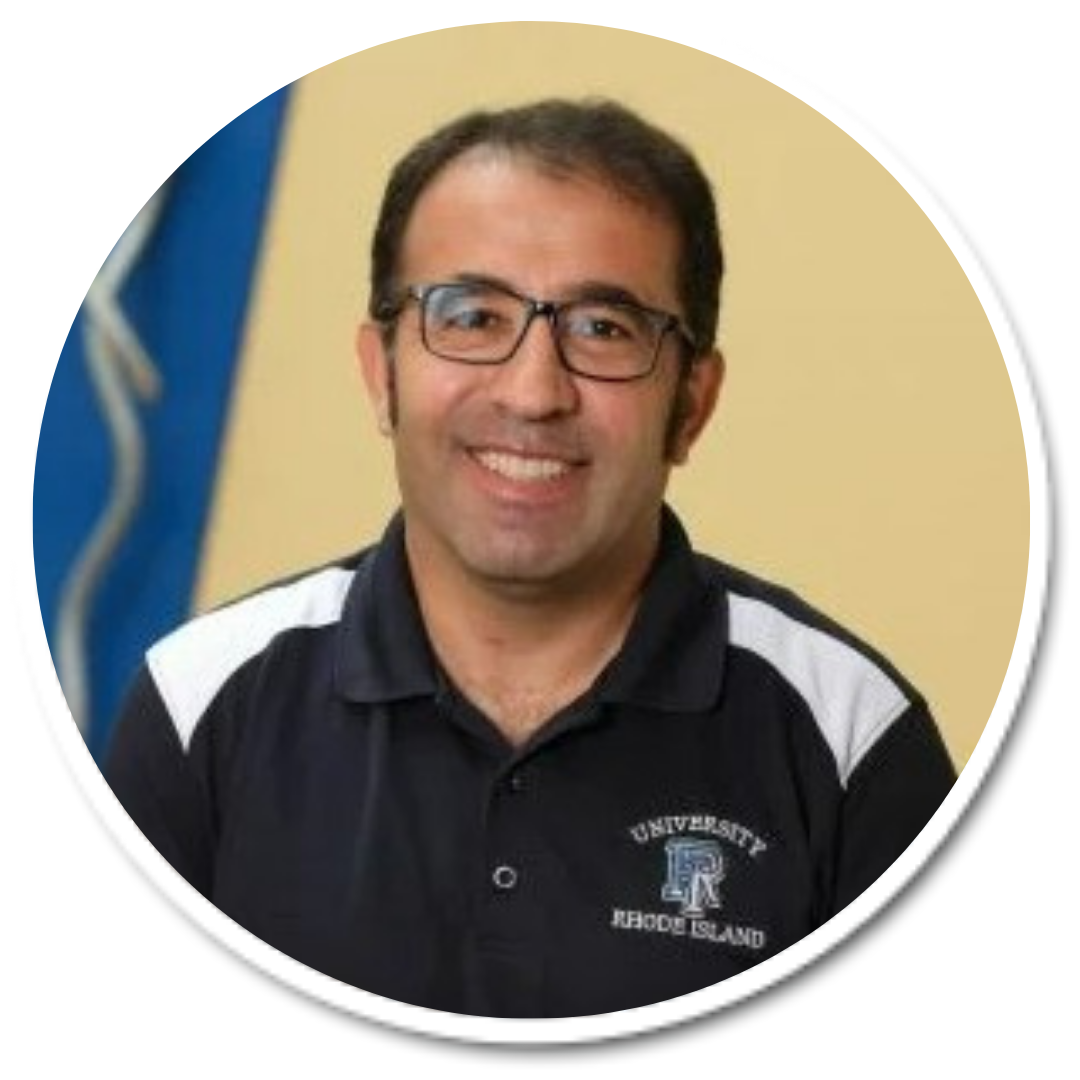
Koray Özpolat
Professor of Supply Chain Management
University of Rhode Island

Maling Ebrahimpour
Professor of Supply Chain Management
University of Rhode Island

Mehmet Gӧkhan Yalҫın
Associate Professor
University of Rhode Island – College of Business
“Mapping the Maze: Developing Curricula in Supply Chain Management.”
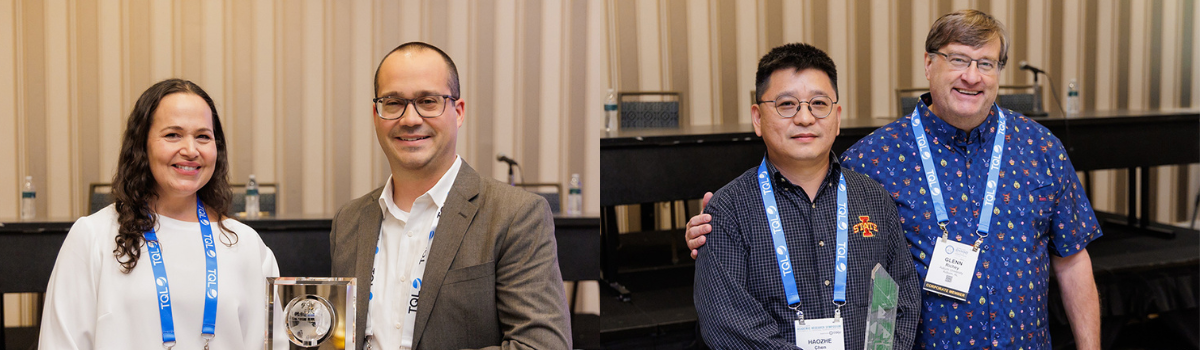
The 2025 Teaching Innovation Award was presented at the Academic Research Symposium (ARS) during CSCMP’s EDGE Supply Chain
Conference & Exhibition in National Harbor, Maryland. This year’s award went to Derek Dubois, Ph.D. Candidate, University of
Rhode Island; Muhammad Hasan Ashraf, Assistant Professor, California State University Long Beach; Koray Özpolat, Professor of
Supply Chain Management, University of Rhode Island; and Maling Ebrahimpour, Professor of Supply Chain Management, University of
Rhode Island for their submission, “Mapping the Maze: Developing Curricula in Supply Chain Management.”
The study examines how undergraduate supply chain management (SCM) programs are designed and updated amid pressures from
accreditation bodies, industry stakeholders, and peer institutions. Guided by Institutional Theory, the authors conducted an
embedded case study that included interviews with academic directors and industry leaders, curriculum reviews, and scholarship
analysis.
Their findings reveal that while accreditation and peer pressures shape curriculum convergence, industry expectations exert the
strongest influence, often steering programs toward immediate employability outcomes. The research offers a framework for
balancing academic rigor with industry relevance, providing actionable guidance for embedding soft skills, analytics, and applied
competencies into SCM curricula.
Past Recipients
2024 — “A Lean 5S Experiential Learning Game for Logistics and Supply Chain Management”
Dr. Shane Schvaneveldt, Weber State University
2023 — “Management Students Create Visual Art: A Novel Approach to Introducing Supply Chain Ethics”
Author: Michael Haughton, Wilfrid Laurier University
2022 — “Consultants’ success story case studies and post-secondary SCM/Logistics Pedagogy”
Author: Amy David, Purdue University
2021 — “Exploring Supply Chain Disruptions: An Active Learning Exercise for Connecting High School Students to SCM”
Authors: Shane J. Schvaneveldt; Francois Giraud-Carrier; Evan Barlow, Weber State University
2020 — “Drive Towards Success: A Case Study”
Authors: Sam Silva-Nash, Transportation Supply Chain Analyst, Walmart; Dr. Carole Shook, Instructor, University
of Arkansas; Kara Patterson, Project and Process Manager, Department of Supply Chain Management
2019 — “Revisiting Promoting the Value of Supply Chain Management to Future Business Leaders”
Authors: Jeffrey Harper, Assistant Professor, Texas Tech University; Stephen Rutner, Professor, Texas Tech
University; Rebecca Scott, Assistant Professor, UNC – Wilmington
2018 — “Elevating Student Competencies through Supply Chain Case Competitions: An Empirical Analysis Utilizing Student
Feedback and Industry Judge Data”
Authors: Scott Keller, University of West Florida; Dr. Daniel Lynch, Dalhousie University; Dr. Katrina
Savitskie, University of West Florida
2017 — “Innovative Activities to Introduce Student to Supply Chain Management: High School and Beyond”
Author: Carole L. Shook, University of Arkansas